有 個人 個商店,每個人可以選擇去編號為 或 的商店,問最多有多少個商店訪客數量為偶數。
將所有的商店看成一個圖,每一個人的選擇就相當於一條邊。現在我們選取一個連通塊取其任意一個 dfs 樹。
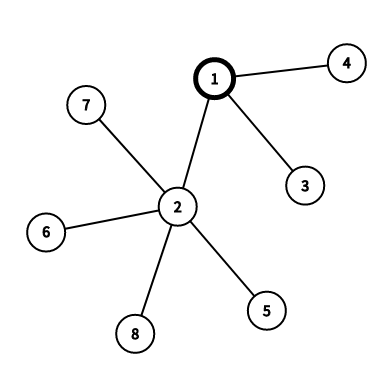
如圖,對於一個 幾個節點組成的子樹,無論初始狀態如何,總可以使 是偶數。同理向上一層, 也可以保證是偶數,只有 不能保證,但倘若有偶數條邊,其他的節點都是偶數, 也必然是偶數,反之必是奇數。
得到結論,當一個連通塊邊數為偶數時,可以全部為偶數,反之必有一個為奇數。
int main()
{
    int n, m;
    std::cin >> n >> m;
    std::vector<int> cnt(m, 0);
    std::vector<int> fa(m);
    std::iota(fa.begin(), fa.end(), 0);

    std::function<int(std::vector<int> &, int)> find =
        [&find](std::vector<int> &f, int x) {
            if (f[x] == x) return x;
            else return f[x] = find(f, f[x]);
        };

    for (int i = 0; i < n; i++) {
        int x, y;
        std::cin >> x >> y;
        x--;
        y--;
        int fx = find(fa, x);
        int fy = find(fa, y);
        if (fx != fy) {
            cnt[fx] += cnt[fy] + 1;
            fa[fy] = fx;
        } else cnt[fx]++;
    }

    int ans = 0;
    for (int i = 0; i < m; i++)
        if (i == fa[i] && cnt[i] % 2 == 1) ans++;
    std::cout << m - ans << std::endl;
}